
Taylor County Arrest Records Charges
A Taylor County arrest record is the law-enforcement and booking-side record of a person being taken into custody. The sheriff-linked jail roster can show name, status, sex, height, weight, redacted address, arrest date, arresting agency, days in jail, total bond, warrant numbers, statute numbers, descriptions, misdemeanor/felony markers, and court names. That roster helps locate current custody and charge lines.
The court charge record begins when charges are filed or tracked in court. Magistrate Court can issue arrest warrants and search warrants. Felony charges may move into Superior Court for prosecution by the Chattahoochee Judicial Circuit District Attorney. The final outcome belongs in the criminal court file, not just the booking record.
The Georgia Department of Corrections offender search source image below is assigned to this page because statewide custody and offender data are separate from Taylor County arrest records and local court-charge files.
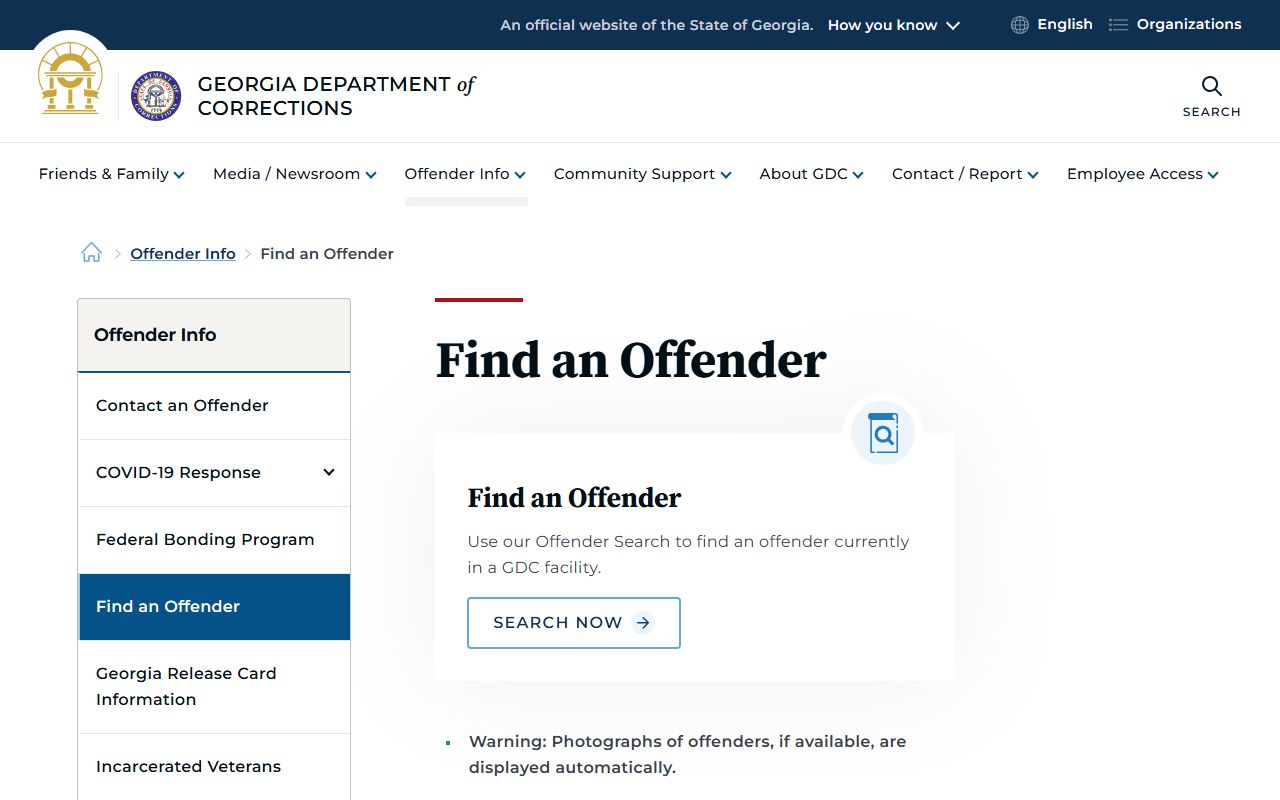
Use the Taylor jail roster for current county custody. Use GDC for state custody. Use the clerk and court for the charge disposition.
Look Up Taylor County Arrest Records
Start with the sheriff-linked Taylor County jail roster for current inmates and recent arrests. It has controls for current inmates, 24-hour arrests, inmates by arrest date, optional inmate-name filtering, search, and pagination. The roster is useful because it links booking data to charge lines and court names, including Magistrate Court and Superior Court.
For formal court charges, use the Clerk of Superior Court when the case is a Superior Court criminal case. Contact Magistrate Court for warrant applications or magistrate-issued warrant activity. If the charge is tied to a city citation or municipal arrest, check the municipal court or city source listed on the ticket or notice.
- Search the jail roster for current booking and charge lines.
- Write down the court, warrant number, statute, charge description, and bond status.
- Call the clerk or court named in the charge line for docket and disposition information.
- Use the DA office for prosecution routing questions, not certified copies.
- Use the GBI/GCIC process for statewide criminal history or record restriction questions.
Taylor County Charging Documents
Charges can be initiated through different documents depending on the stage and severity. The research did not locate a Taylor-specific public sample charging document, so the safest treatment is to describe the standard court roles without inventing a local form. The court file or prosecutor record determines which document controls a specific case.
| Document | Who uses it | What it does |
|---|---|---|
| Complaint or warrant application | Law enforcement, applicant, or Magistrate Court process | Starts or supports probable-cause and warrant activity. |
| Accusation | Prosecutor | Files formal charges without grand-jury indictment where Georgia procedure allows. |
| Indictment | Grand jury and prosecutor | Formal felony charging document used for serious Superior Court prosecution. |
After an arrest, one booking event can produce multiple charge counts. The charge description, statute, misdemeanor/felony marker, court, and bond can change as prosecution proceeds.
Taylor County Charge Status
Charge status is not static. A roster charge may be pending while the court waits for a hearing, filing, plea, indictment, accusation, or dismissal. A prosecutor may amend or reduce a charge. A judge may dismiss a charge, or the prosecutor may enter nolle prosequi, meaning the state is not proceeding with that charge at that time.
| Status | Meaning |
|---|---|
| Pending | The charge is active or awaiting the next court/prosecution event. |
| Amended / reduced | The charge was changed, often to a different offense or severity level. |
| Dismissed | The court has dismissed the charge or case as reflected in the record. |
| Nolle prosequi | The prosecutor has chosen not to proceed with that charge at that time. |
| Convicted | A guilty plea, nolo contendere plea, or guilty verdict produced a judgment. |
Taylor County Charge Conviction Difference
Being arrested or charged is not the same as being convicted. Taylor County jail roster data can show a charge soon after booking, before the DA has made every filing decision and before Superior Court or Magistrate Court has reached an outcome. For employment, licensing, housing, or personal legal decisions, obtain the court disposition before drawing conclusions.
| Charge | Conviction | |
|---|---|---|
| Record stage | Arrest, warrant, accusation, indictment, or docket allegation. | Final criminal judgment after plea or verdict. |
| Can be changed? | Yes, charges can be amended, dropped, dismissed, or reduced. | Usually changed only through court process, appeal, restriction, or pardon-related relief. |
| Where to verify | Jail roster, warrant record, clerk docket, prosecutor record. | Clerk disposition, sentencing order, criminal history release. |
Taylor County Prosecutor Charge Routing
The Chattahoochee Judicial Circuit District Attorney prosecutes Superior Court criminal cases for Taylor County. The Prosecuting Attorneys' Council listing names William Donald Kelly, Jr. as District Attorney, with the Columbus office phone 706-653-4336. The DA files or handles formal prosecution decisions, while the arresting agency creates the arrest record and the clerk maintains the official court docket and case file.
The District Attorney Victim Witness contact page is shown below because it includes Taylor County victim-witness routing, including the Chattahoochee, Taylor, Talbot, and Marion County advocate.
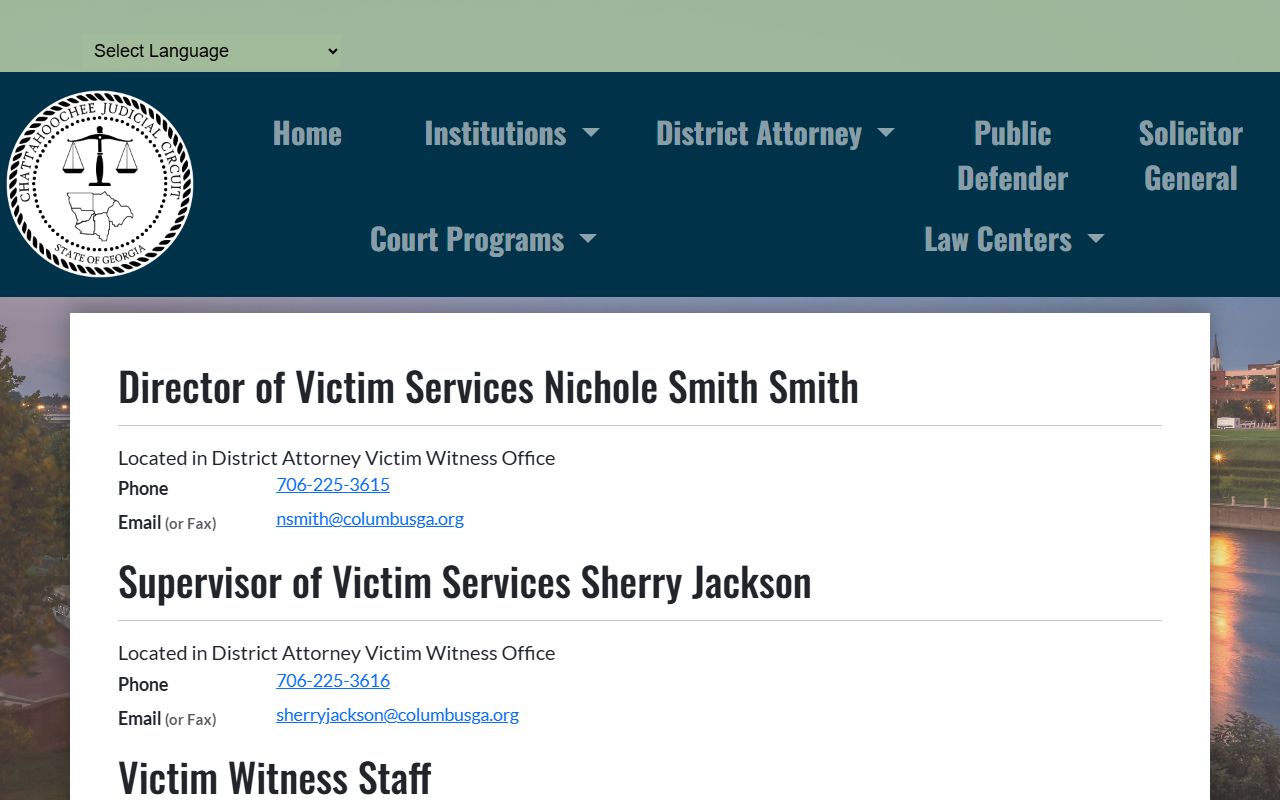
Victims should use DA victim-witness contacts for victim services. Defendants should use counsel or court contacts for case obligations. Public record copies still come from the office that keeps the record.
Taylor County Statewide Charge Records
Statewide criminal history and registry tools are separate from Taylor County court-charge lookup. The GBI sex offender registry is linked by the Taylor County Sheriff's Office and is useful for registry status, not for every arrest or charge. The GBI criminal history process and record restriction rules govern how some Georgia criminal history information is released or limited.
The Georgia sex offender registry source image below is assigned to this page because it is an official statewide tool linked from the sheriff source, but it should not be confused with a complete arrest-record database.
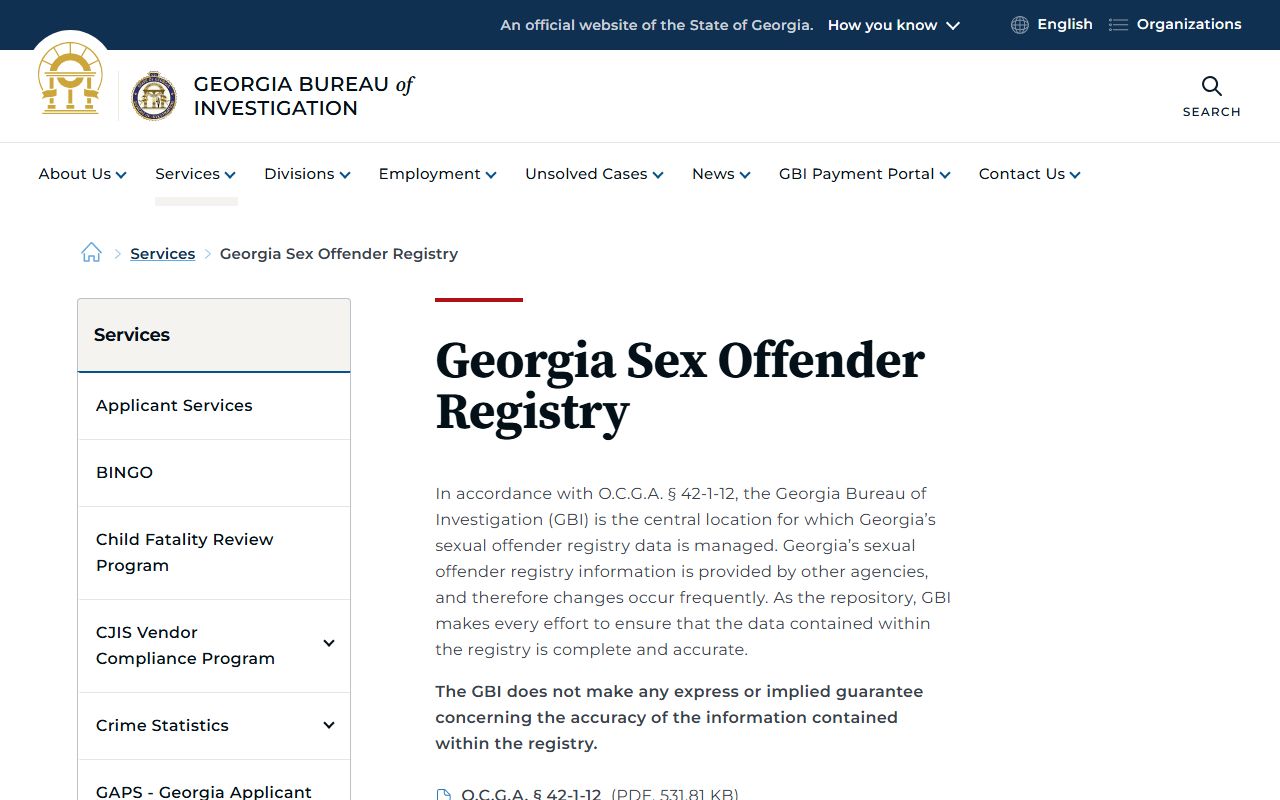
For final case outcome, return to the Clerk of Superior Court or the court named on the charge line. For statewide criminal-history release or restriction, use GBI guidance and the arresting agency or prosecutor path when required.
Record restriction is especially important on arrest and charge searches because a non-conviction can still leave records in several places. The arresting agency, jail, prosecutor, clerk, and GCIC criminal history system may each have a separate record of the same event. Georgia's GBI guidance says post-July 1, 2013 arrests generally route through the prosecutor for restriction review, while older arrests may involve the arresting agency. A Taylor County user should first identify the arrest date, arresting agency, case number, court, and disposition.
Do not use the sex offender registry as a substitute for a full criminal case search. Registry status has its own legal rules and may not reflect all charges, all dismissals, or the current court docket. For a charge line that appears on the jail roster, the more reliable path is roster field review, court name confirmation, clerk docket check, and then the court disposition.
Note: Taylor County arrest records can point to charges, but the court disposition decides whether a charge became a conviction.