
Taylor County Marriage License Rules
Taylor County Probate Court issues marriage licenses for the county. The local court requires both applicants to appear in person, and both applicants must be at least 18. Each applicant must bring picture identification. If either person was married before, the applicant must bring proof that the prior marriage ended by divorce or death. The court links applicants to the Georgia Probate Records marriage application tool, but the local appearance requirement still matters because the license is issued by the court.
The Taylor County Probate Court does not perform marriage ceremonies. Couples need an authorized officiant separate from the court. After the ceremony, the person authorized to perform the marriage should return the license to Probate Court within 30 days so it can be recorded. That return step is important because a license that has not been returned and recorded may not support a certified copy request later. The same Probate Court office is also the starting point for recorded marriage license searches and certified copies.
The Georgia DDS points page appears in the assigned image set for Taylor County marriage and divorce records, but driver points are not marriage records or divorce records.
This distinction helps keep Taylor County marriage and divorce record searches separate from driver history searches, even when several public records are handled through state websites.
Apply for Taylor County Marriage Records
The online application can save time, but it does not replace the court visit. Taylor County Probate Court points applicants to the Georgia Probate Records marriage application and also lists the local items that must be brought to the court. Bring the prior divorce decree or death proof when it applies, because the court states that prior marriage proof is required. Bring the signed and notarized premarital counseling form only if claiming the reduced fee.
- Review Taylor Probate Court requirements before starting the application.
- Complete the Georgia Probate Records marriage application if using the online form.
- Both applicants appear in person with picture identification.
- Bring divorce or death proof if either applicant had a prior marriage.
- Bring the notarized premarital counseling form if requesting the reduced license fee.
- Pay the license fee with an accepted payment method.
- Use an authorized officiant, then return the signed license to Probate Court within 30 days.
Note: Taylor Probate Court accepts cash, money order, Visa, and MasterCard for listed services, with a convenience fee added for card payments.
Taylor County Marriage Application Fields
The full online form fields were not visible in the static research capture, so the safest field inventory is based on the local court's stated requirements. Applicants should expect to provide identifying information for both people, answer prior-marriage questions, and document eligibility. If a field is unclear in the web form, the court visit is the point where staff can confirm what is missing. Court staff can receive forms and explain office requirements, but they cannot give legal advice.
| Requirement | Type | Required | Notes |
|---|---|---|---|
| Applicant 1 and Applicant 2 appearance | In person | Yes | Both applicants must appear at Taylor County Probate Court. |
| Age | Eligibility | Yes | Both applicants must be at least 18 per the local court page. |
| Picture ID | Document | Yes | Required for both applicants. |
| Prior marriage proof | Document | Conditional | Proof of divorce or death is required when either applicant had a prior marriage. |
| Premarital counseling form | Notarized form | Optional | Reduces the license fee when the court accepts the signed form. |
| Return after ceremony | Filing step | Yes | The license should be returned to Probate Court within 30 days. |
Taylor County Marriage and Divorce Fees
Taylor Probate Court publishes the main marriage fees, including the regular license fee, the reduced premarital-counseling fee, and certified marriage copy cost. The research did not locate an official Taylor County online fee table for Superior Court divorce copies or certified divorce decrees. For divorce copies, contact the Clerk of Superior Court before mailing payment because the clerk can confirm the current copy and certification charge.
| Item | Amount / status |
|---|---|
| Marriage license | $56 |
| Marriage license with signed and notarized premarital counseling form | $16 |
| Certified marriage license copy | $10 each |
| Card convenience fee | Added for Visa or MasterCard payments |
| Divorce filing or divorce copy fee | Not located in official Taylor sources; call the Clerk of Superior Court |
The U.S. District Court for the Middle District of Georgia is a federal court source assigned to this page's image set, but federal court does not issue Taylor County marriage licenses.
Use that federal distinction when a name search finds a federal case instead of a Taylor County marriage license or divorce file.
Search Taylor County Marriage Records
GeorgiaProbateRecords.com includes a "Search Recorded Marriage Licenses" function and a marriage application tile. Taylor County Probate Court directs users to that system for probate-related records and applications. For a marriage search, use the names of the spouses, the approximate date, and any license details already known. If the record does not appear online, do not assume there is no record. Older records, recently returned licenses, and records not yet available through the portal may still need direct Probate Court help.
Certified marriage copies should be requested from Taylor County Probate Court. A certified copy may be needed for a name change, benefits, insurance, immigration, or another formal use. An online search result may help locate the license, but it is not always the same thing as a certified court-issued copy. For genealogy work, Probate Court remains the starting point because it is the office that issues and records marriage licenses in Taylor County.
Find Taylor County Divorce Records
Divorce records are not Probate Court records in Georgia. Superior Court has exclusive jurisdiction over divorce, and in Taylor County the Clerk of Superior Court maintains Superior Court records. A divorce case file can include the complaint, summons, answer, temporary orders, settlement agreement, child custody or parenting plan, child support documents, financial affidavits, final judgment and decree, contempt filings, modification filings, and appeal entries. Some parts of a divorce case may be redacted or restricted.
Electronic access may be available through provider access because Georgia Courts lists Taylor Superior through PeachCourt, but provider account access may be required. If online access is not practical, request the file through the Clerk of Superior Court at 2 N Broad Street, PO Box 248, Butler, GA 31006-0248, phone 478-862-5594. For criminal and civil records, the county court page routes requests to Denise.Trower@gsccca.org. Ask for copy fees before sending payment.
The Middle District's qualifying counties page confirms Taylor County's federal district placement, but divorce records remain state Superior Court records unless a separate federal case exists.
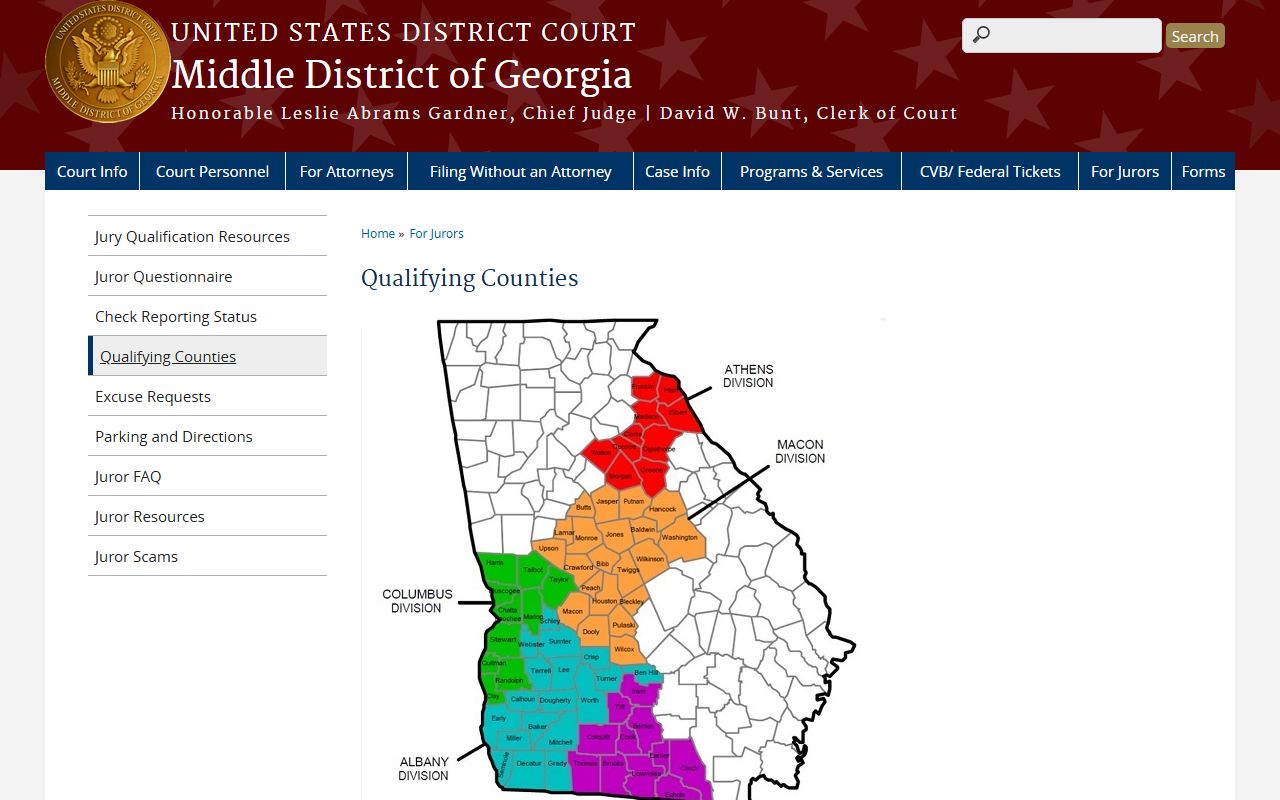
That federal source can help separate federal litigation from Taylor County divorce records when the same names appear in more than one court system.
Certified Taylor County Copies
Certified copies come from the office that keeps the record. For marriage records, use Taylor County Probate Court. For divorce records, use the Clerk of Superior Court. Provide the full names, approximate date, case number or license number if known, the type of copy needed, the number of copies, return mailing address, and a phone number or email for follow-up. When requesting by mail, wait for the office to confirm the fee if the official online source does not list it.
Privacy rules matter in family files. Divorce records may include minor child details, financial account numbers, domestic violence safety concerns, sealed exhibits, or judge-sealed material. A public copy may omit or redact those parts. Marriage records are more direct, but the court still controls certified copy issuance. If a third party asks for a "certified divorce certificate," confirm whether they need the full decree, a final judgment, or only proof that the divorce was entered.